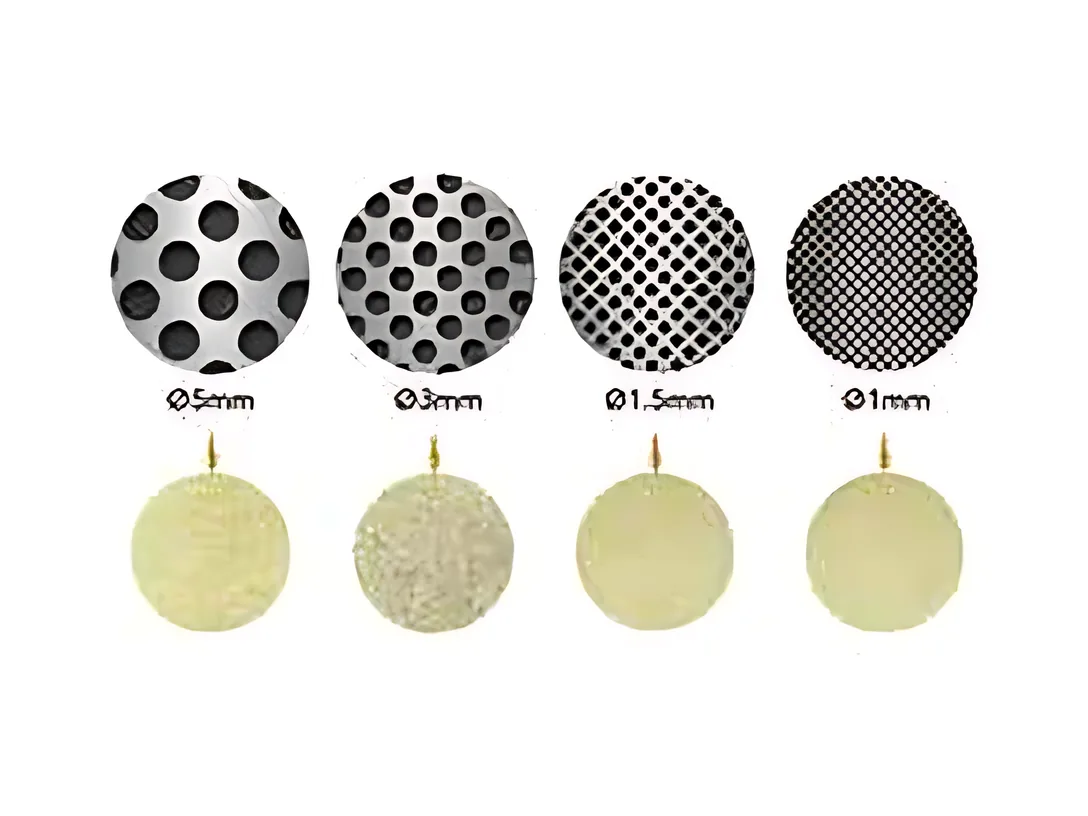
In a hammer mill, the screen decides the final particle size. Hammers turning at about 1,480 rpm break the grain until the particles are small enough to pass through the screen holes – so changing a 3 mm screen for a 2 mm one changes the feed, the output and the electricity bill.
Why particle size matters
- Pellet quality – finer, even particles bind better, so pellets are harder and produce fewer fines.
- Digestibility – the right grind helps animals use more of the nutrients in the feed.
- Mixing – similar particle sizes mix evenly and do not separate during handling.
- Energy and capacity – smaller holes mean more grinding, less output per hour and more kWh per ton.
Typical starting points
| Feed type | Typical screen | Notes |
|---|---|---|
| Poultry pellets and crumbles | 2.5–3 mm | Fine enough for durable pellets |
| Poultry mash | 3–4 mm | Coarser grind supports gizzard function |
| Cattle feed | 3–5 mm | Coarser particles suit ruminants |
| Fish and shrimp feed | 1 mm or finer | Very fine grinding before extrusion |
These are starting points – your nutritionist and your pellet mill will tell you where to settle. Test, measure the particle size and adjust.
Getting the most from the screen
- Keep hole-opening area high. Our SMSP965 capacities are rated with a 3 mm screen and a hole-opening rate of at least 33%.
- Watch moisture. Ratings assume maize at 12% moisture or less; wetter grain grinds slower and blinds the screen.
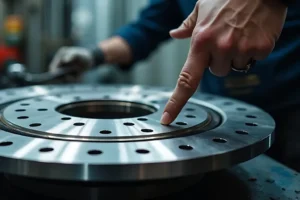
- Turn or replace hammers and screens in time. Worn hammers and screens cut capacity and give a wider particle spread.
- Feed evenly. A variable-speed feeder keeps the motor near its rated load without overloading.
SEMZON SMSP hammer mills take screens from Ø1 to Ø5 mm and cover 2 to 35 t/h. We also supply replacement screens and hammers through our dies and tooling service. Need help choosing? Talk to our team.
Frequently asked questions
Does a smaller screen always give better pellets?
Up to a point. Finer grinding improves pellet durability, but it lowers hammer mill output and raises energy use. The best screen is the coarsest one that still gives the pellet quality you need.
How often should hammer mill screens be replaced?
Replace screens when holes are visibly worn or torn, or when capacity drops at the same load. Check them every time you turn or change the hammers.
Why is my hammer mill output lower than the rating?
Common causes are wet grain, worn hammers or screens, a low hole-opening area, uneven feeding or a smaller screen than the rating assumes.