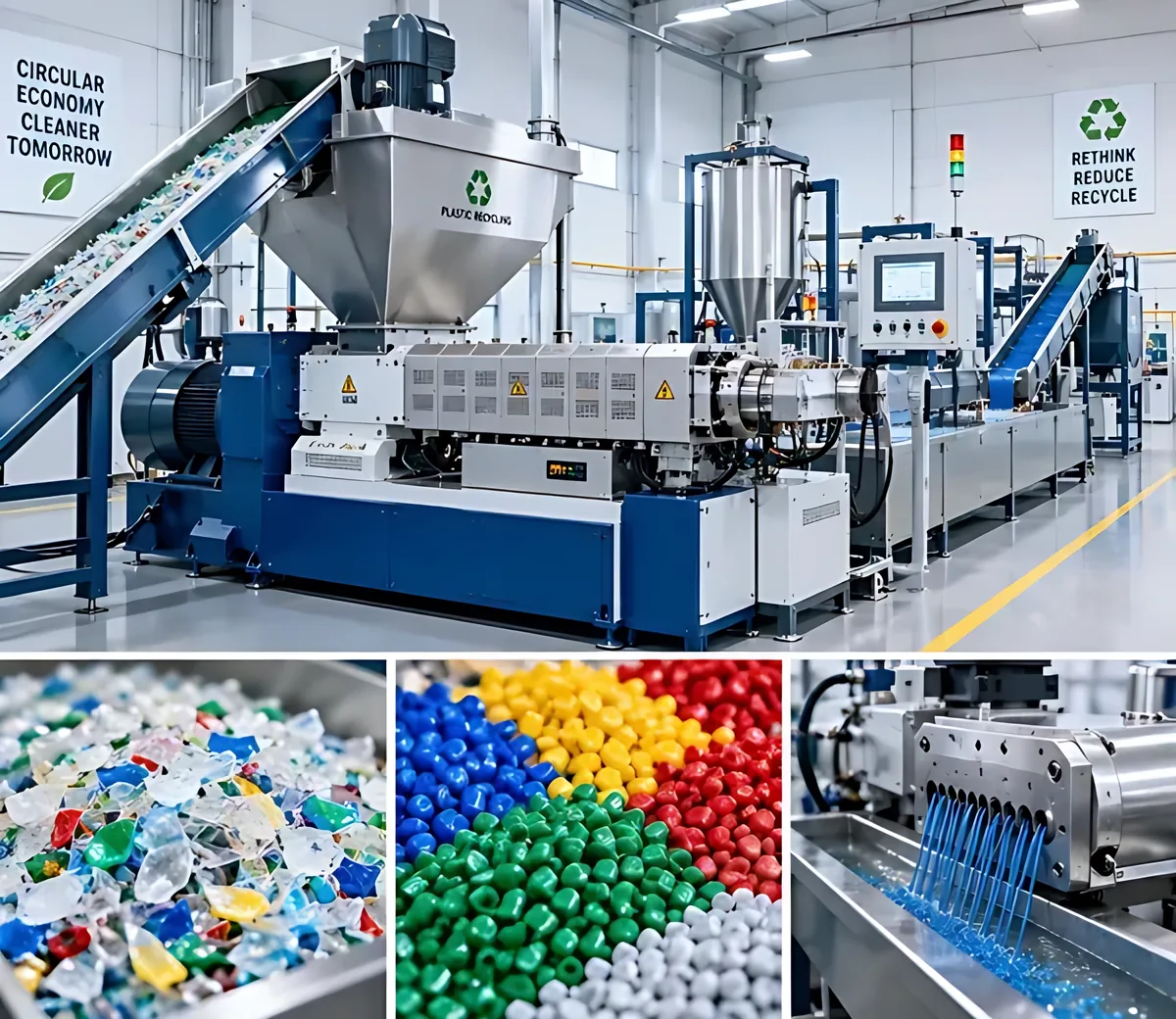
Sorting, float-sink and friction washing remove dirt, labels and other plastics before extrusion.
Moisture
Centrifugal dryers for plastic flakes and rotary dryers for compost keep downstream steps stable.
Saleable quality
Melt filtration and uniform pelletizing produce granules that buyers accept; separators keep compost granules on-spec.
Dust and odour
Cyclones, blowers and enclosed conveying keep the plant cleaner.
Our approach
Two Routes to Recycling
Plastic recycling: sorting, shredding, float-sink and friction washing, centrifugal drying, extrusion with melt filtration and pelletizing — configured for film, bottles, crates or industrial scrap.
LDPE and LLDPE film, HDPE bottles and crates, PP woven bags and crates, and PET bottles to flakes.
Do I need a washing line?
For post-consumer waste, yes — dirt and labels must be removed before extrusion. Clean industrial scrap can often go straight to shredding and extrusion.
Can organic waste be turned into fertilizer?
Yes. A compost granulation plant blends, granulates, dries, screens and packs organic waste into compost fertilizer.
Do you install and train operators?
Yes. We install, commission and run the line with your team until operators are confident.
Start Your Project
Let’s Build Your Industrial Solution
Tell us about your capacity, raw material and site. Our engineering team will design a custom turnkey solution tailored to your exact requirements and budget.