Fertilizer Plants & Agricultural Processing Systems
SSP, BOP, NPK and organic compost fertilizer plants from 50 to 200 tons per day, plus grain pre-cleaning systems that protect your downstream equipment.
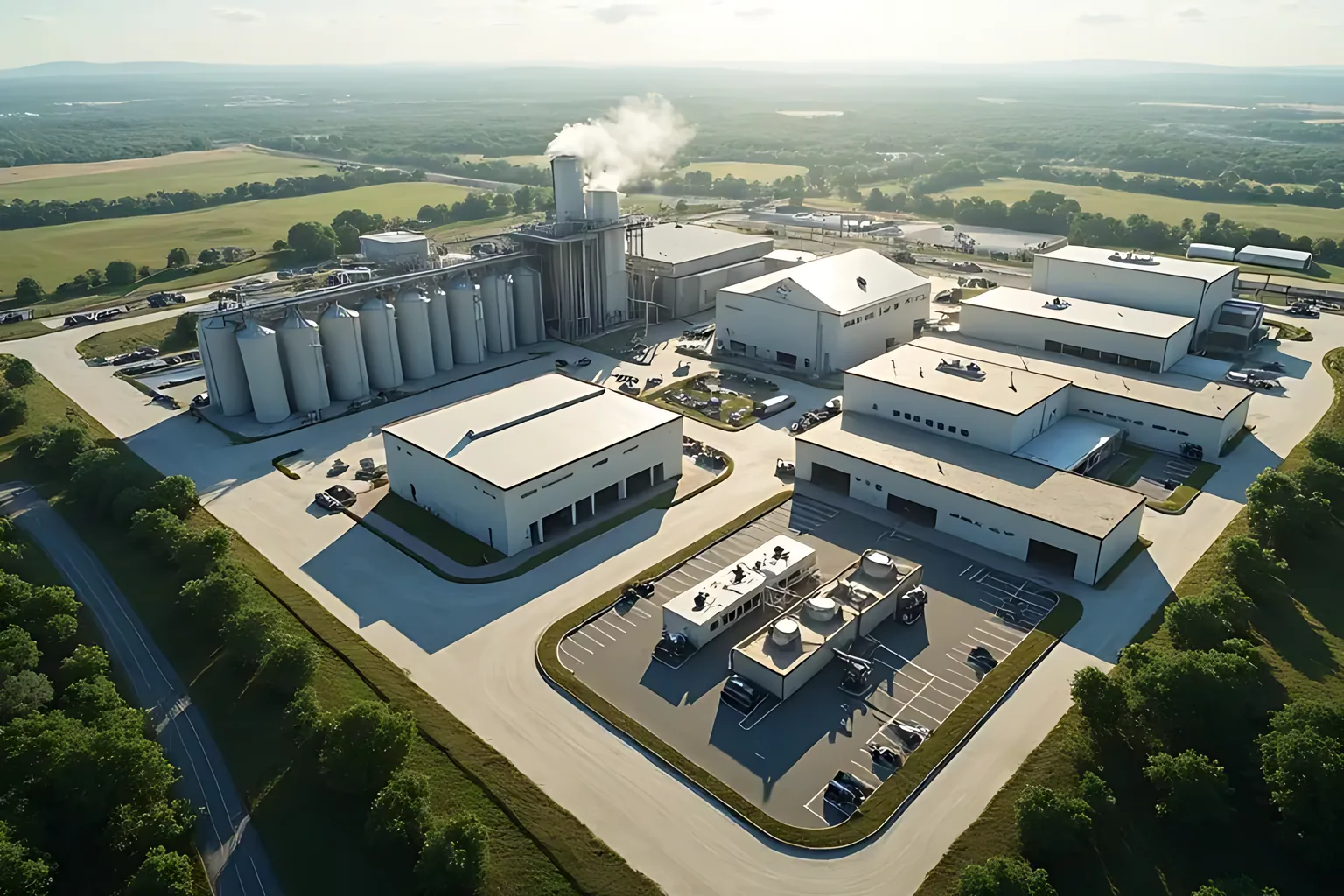
SEMZON builds complete granulation lines for single super phosphate (SSP), bio organic phosphate (BOP), NPK and compound fertilizers, and for organic compost made from municipal and farm waste.
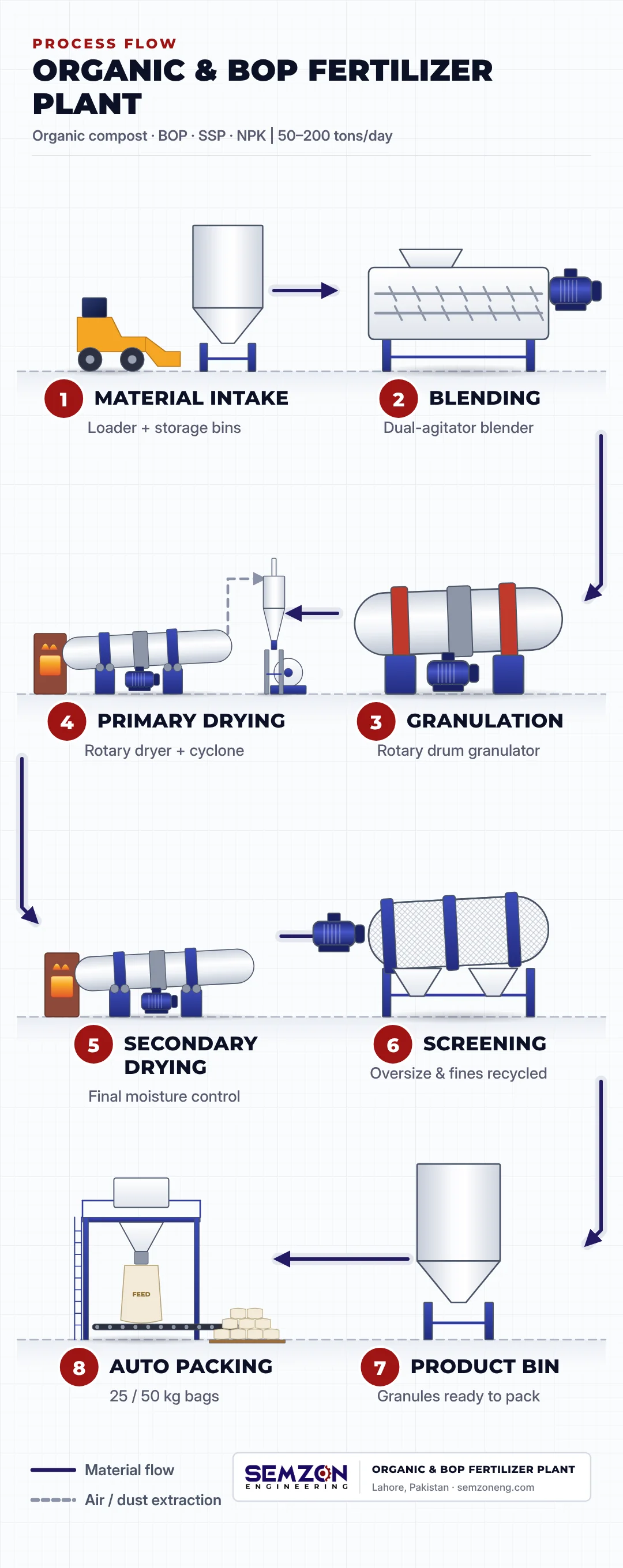
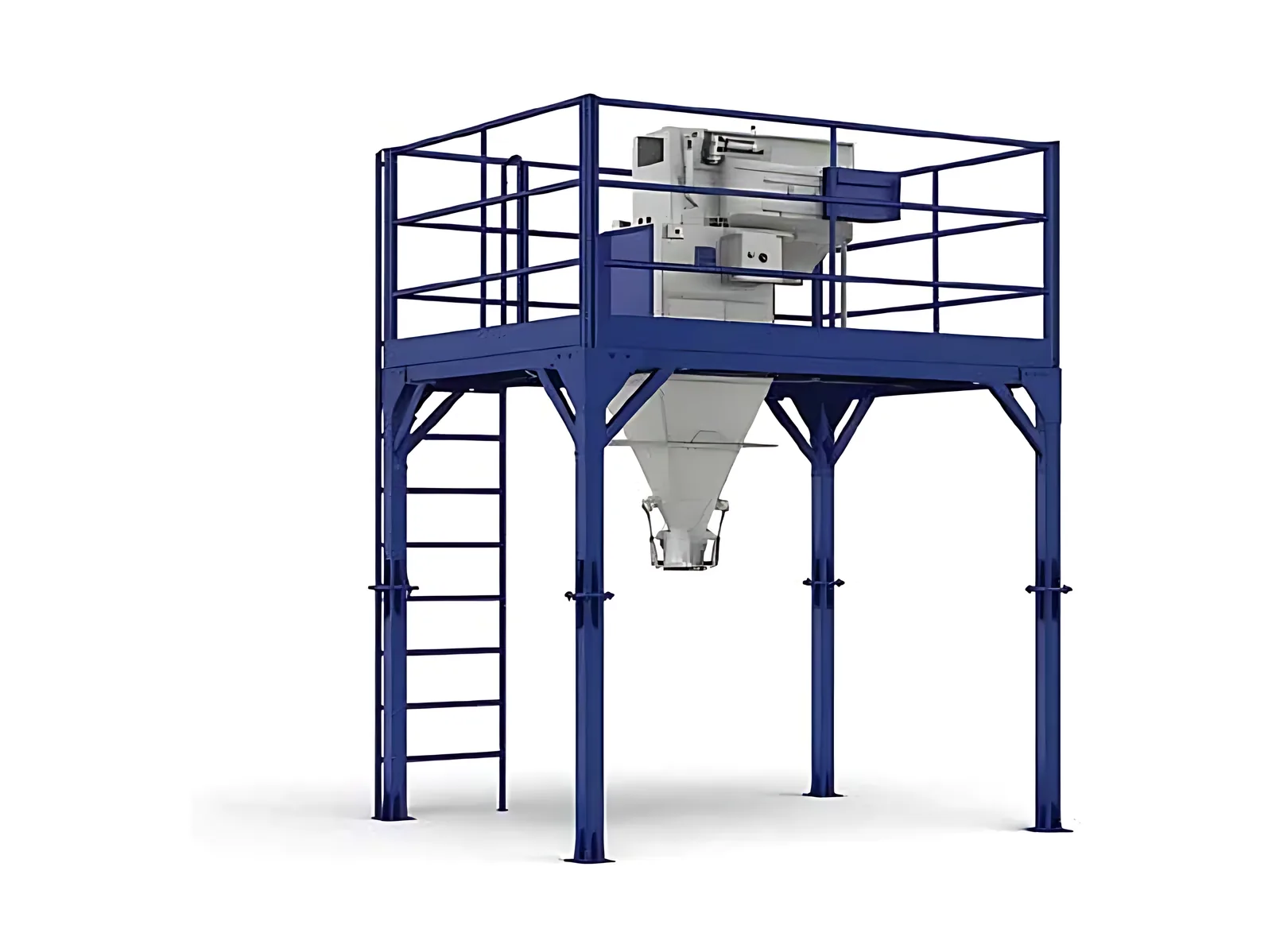
A typical line includes material intake and storage bins, a dual-agitator blender, a rotary granulator, primary and secondary rotary dryers (33 ft and 48 ft in our recent plants), cyclones and blowers for dust collection, a rotary separator that recycles oversize and fines, and automatic packing. SSP plants add an acid dilution system, ribbon mixer, curing den and fume scrubber.
Recent references include a 50 t/day BOP plant and a 50 t/day SSP plant in Nooriabad, Karachi, and a 50 t/day organic compost line in Quetta. For grain handlers we supply CP series maize pre-cleaners that remove stones, dust and metal before drying, milling or storage.
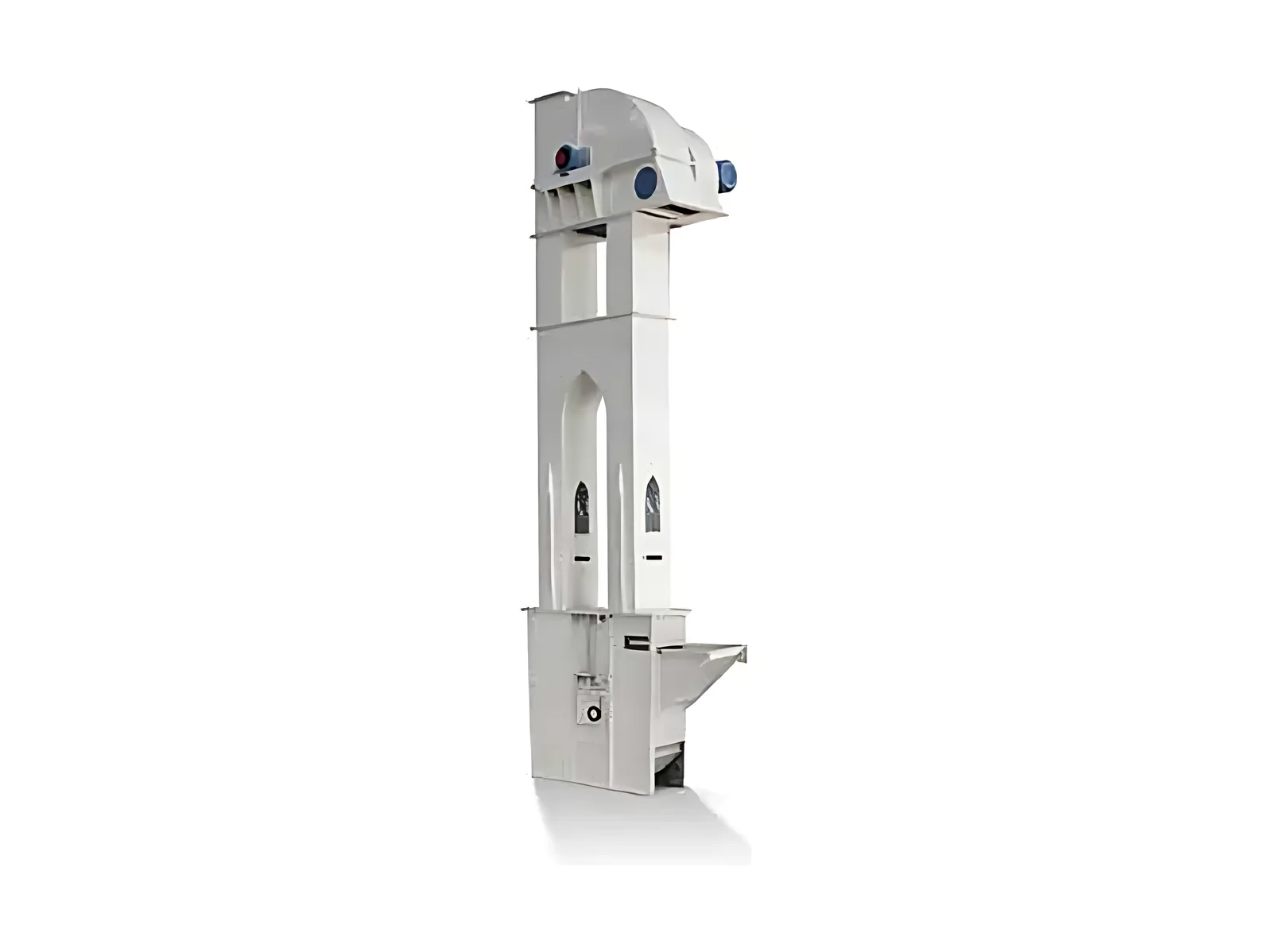
Remove coarse impurities, fines, dust, stones and ferrous particles from raw maize before drying, milling or storage. Clean grain reduces wear on downstream equipment and improves storage life.
SSP and BOP plants from 50 to 200 tons per day and organic compost units from 50 to 100 tons per day. NPK and compound fertilizer lines are designed to order.
What is the difference between BOP and organic compost plants?
BOP (bio organic phosphate) combines rock phosphate with organic matter and beneficial microbes, while compost plants process organic waste alone. Both use blending, granulation, drying and screening, so the equipment is similar.
Do you supply the acid handling system for SSP?
Yes. Our SSP plants include acid storage and an acid dilution system, the ribbon mixer and curing den, a fume scrubber, and the granulation, drying and screening section.
Can the plant run on municipal waste?
Yes. Our 50 t/day line for the Quetta Waste Management Company turns organic waste into granulated compost fertilizer.
What does a maize pre-cleaner do?
It removes coarse impurities, fines, dust, stones and ferrous particles from raw maize before drying, milling or storage. This reduces wear on downstream equipment and improves storage life.
Start Your Project
Let’s Build Your Industrial Solution
Tell us about your capacity, raw material and site. Our engineering team will design a custom turnkey solution tailored to your exact requirements and budget.