Designing a feed mill starts long before the first machine is ordered. The decisions you make on paper – capacity, products, layout and automation – fix the cost per ton for the life of the plant. Here is the sequence our engineers follow on every turnkey project.
1. Define capacity and product mix
Start with the tons per hour you need, the number of shifts and the products you will make: mash, pellets, crumbles, or extruded feed. Poultry, cattle and aqua feeds need different grinding, conditioning and pelleting equipment, so the product list shapes the whole line.
2. Plan raw-material intake and storage
Decide how grain and meals arrive (bags or bulk), how much you will store and for how long. Intake pits, cleaners, silos and bins are sized from this, together with the magnets and screens that protect the machines downstream.
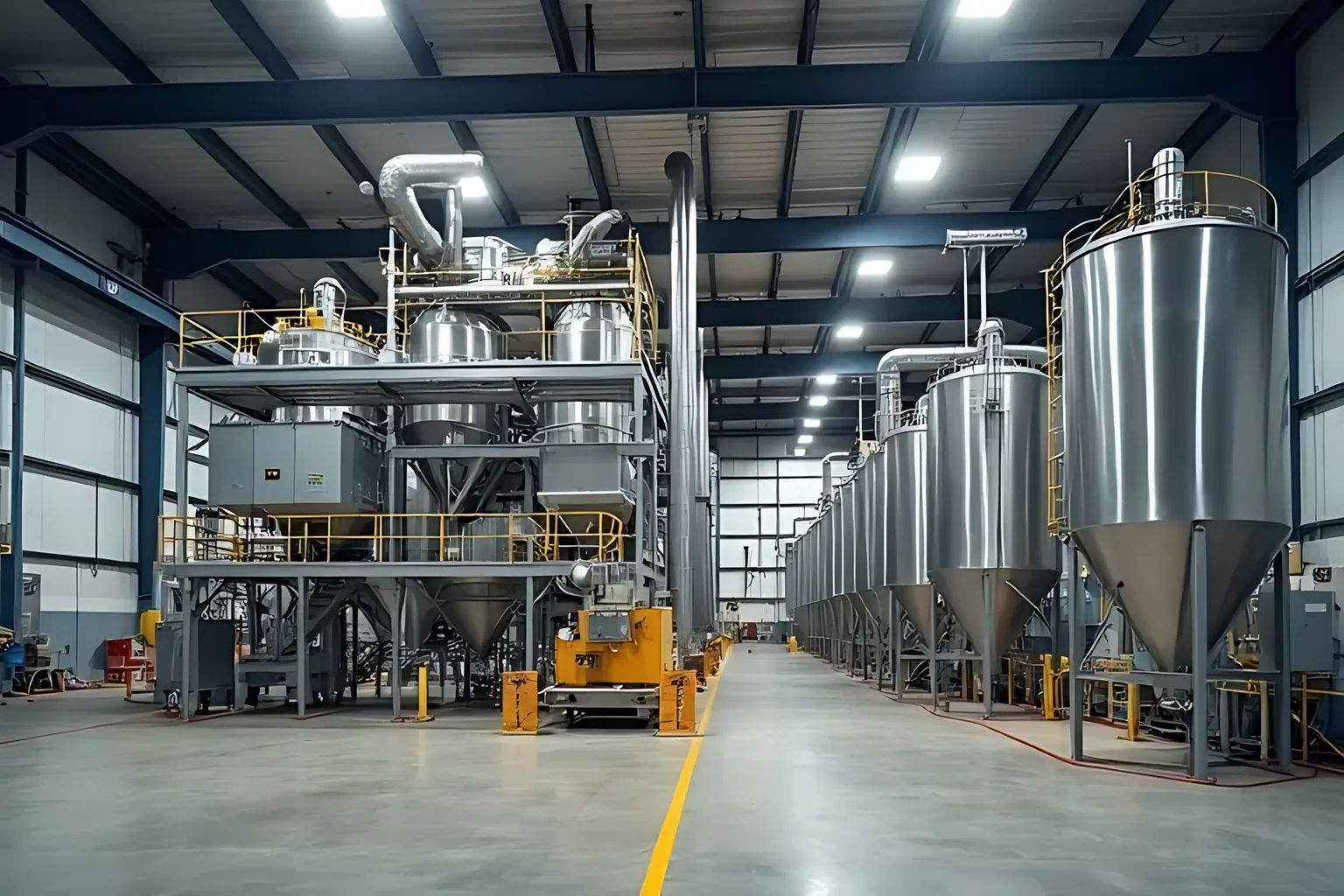
3. Lay out the process sections
A complete line normally includes:
- intake and cleaning;
- grinding with hammer mills;
- batching and weighing;
- mixing and liquid addition in a paddle mixer;
- conditioning and pelleting;
- cooling, crumbling and screening;
- packing and dispatch.
Our feed production plant page shows this flow as a diagram.
4. Design the building and the flow
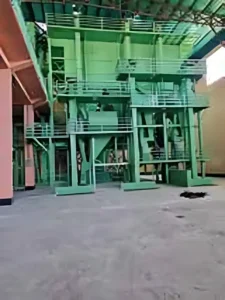
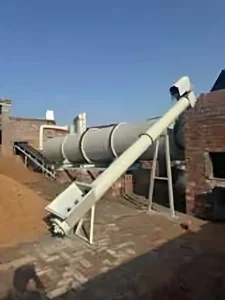
Most feed mills use gravity between sections, with bucket elevators and conveyors lifting material to the top. The building height, floor loads and maintenance access come from this flow – not the other way round.
5. Size the utilities
The pellet mill sets the size of the steam boiler and the cooler fan. Add the connected power of every motor, compressed air for gates and valves, and lighting and ventilation for the building.
6. Choose the automation level
PLC/SCADA batching weighs every ingredient automatically, records each batch and reduces recipe errors. Our control panels are built in-house, so faults can be traced quickly.
7. Install, commission and train
Installation, cabling, trial runs with real recipes and operator training turn the machines into a working plant. Agree on the performance test before you start.
Size the cooler and the boiler for your pellet mill – not the other way round.
Want a layout for your site? Send us your capacity, products and plot size and our engineers will prepare a proposal.
Frequently asked questions
How long does it take to build a feed mill?
It depends on capacity and site readiness. Machines are usually manufactured while civil works are under way, and installation and commissioning follow once the building is ready.
How much land does a feed mill need?
That depends on capacity, storage and truck access. Share your plot size with us and we will check whether the layout fits before you invest.
Can a plant be expanded later?
Yes, if expansion is planned from the start. We leave space and structural capacity for a second pellet line, extra bins or a larger packing section.